The debate and discussion around a Local GDS is now over a decade old and still going strong (Phil Rumens has curated a list here) and yet we appear not to be any closer to an agreed way forward… I know I certainly disengaged with this subject for some time as It didn’t feel like anything would change and it felt like wasted energy when I could focus on the local council I was working in, after all change and transformation is hard work in one organisation let alone the whole sector and wider system.
I’ve accepted though, that essentially I am and have been complicit in maintaining the status quo and yet at the same time, working really hard to change the very system I work in. I suspect others may have been doing the same, maybe not, I’m not here to judge, just making a personal observation and making an assumption that others may have been in similar spaces…
I don’t believe we’ve not been able to resolve this due to a lack of ideas or options or recognition of the deeper, more fundamental problems facing the sector. So why then are we pretty much where we were when we started this all those years ago?
My observation and I’m going to be intentionally provocative here, would be that as individuals and groups coming together we aren’t yet capable of holding the space for the inevitable tensions and discomfort that need to emerge by having such deep fundamental discussions. In my experience and through observation we get caught up either agreeing too easily with each other (after all it is energising feeling connected with people), or defending a position we believe to be right (we might be motivated to get our idea to the top), or unintentionally talking down other people’s ideas who may have traction (we may feel challenged by others ideas), or we might suggest to each other that the bold visions are too blue sky, unrealistic, say it will never happen (we may struggle to wrestle with the tensions that sit inside us), or even brushing aside and sweeping under the carpet and ignoring the deep truth in the sector that it’s just broken and we might be watching and residing over the steady and managed decline of local government (we might find comfort in painting a picture of the reality that is easier to accept).
For me all of this is about how we have the conversation and how we understand what might be playing out for individuals in those discussions.
There are three models I’m going to provide a very brief overview of that have helped me lean into having honest, productive and accountable conversations and I believe these will help those who are having conversations as well as those who need to have the conversations.
The first is advocacy and inquiry, the second is understanding creative tension and the third is working with polarities.
I’ve included very basic pictures and models for each one below to hopefully help people access / understand the tools a bit more, it is essentially about practising this and developing the skills to use them in actual conversations and discussions.
Advocacy and Inquiry:
Why this model: Through observation I think there is a tendency to only choose one of these approaches and I believe the debate would be enriched by helping create a balance.
Summary: Chris Argyris and Donald Schön pioneered the conversation tools of advocacy and inquiry. These tools allow for the right balance of meaningful dialogue and exchange among people in conversations/discussion. Advocacy is about how one influences another’s thinking and behaviour by stating one’s beliefs and thought patterns and inquiry is a process for understanding a person’s perspectives and assumptions by exploring his/her reasoning and conclusions.
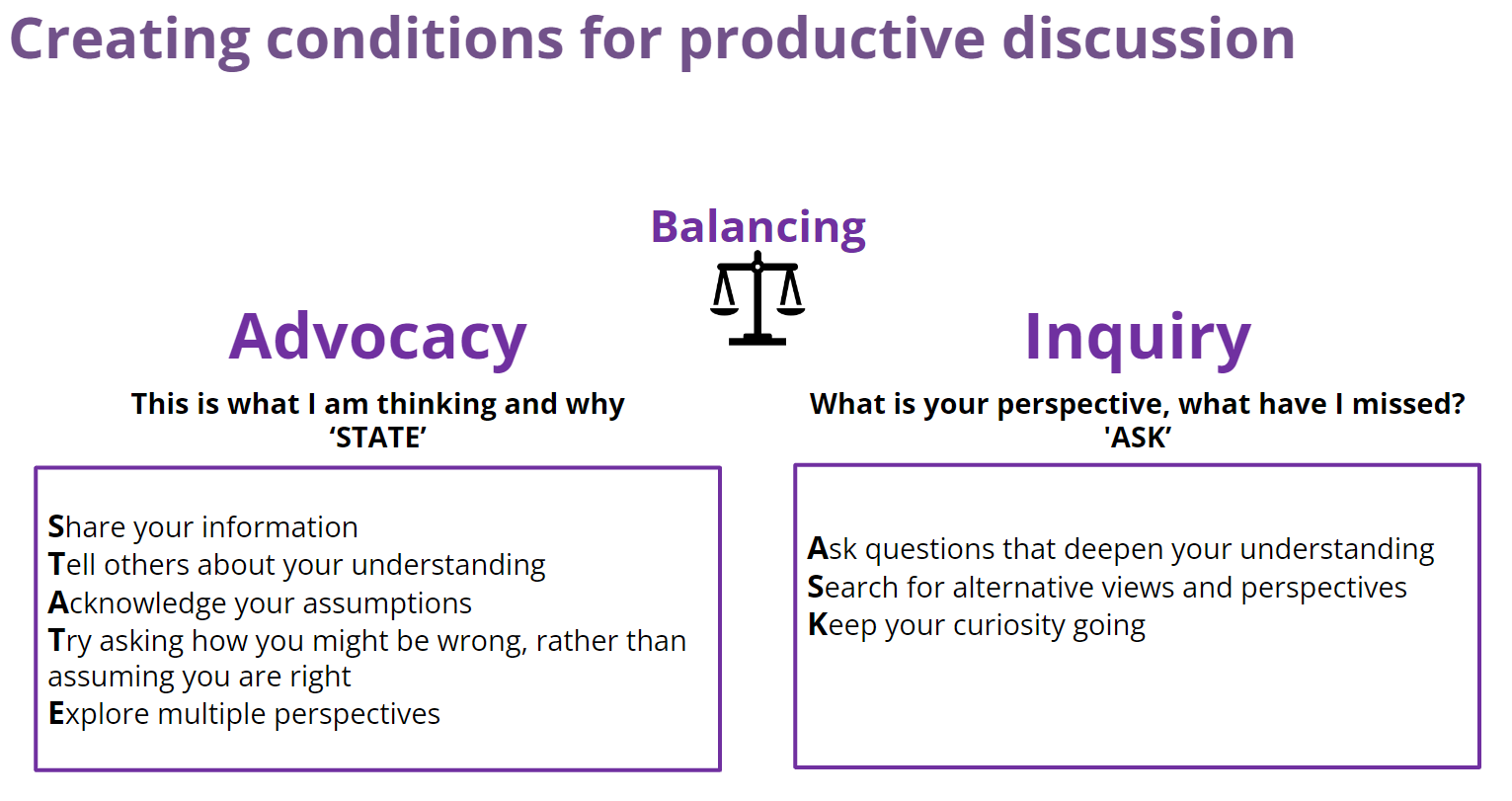
STATE and ASK
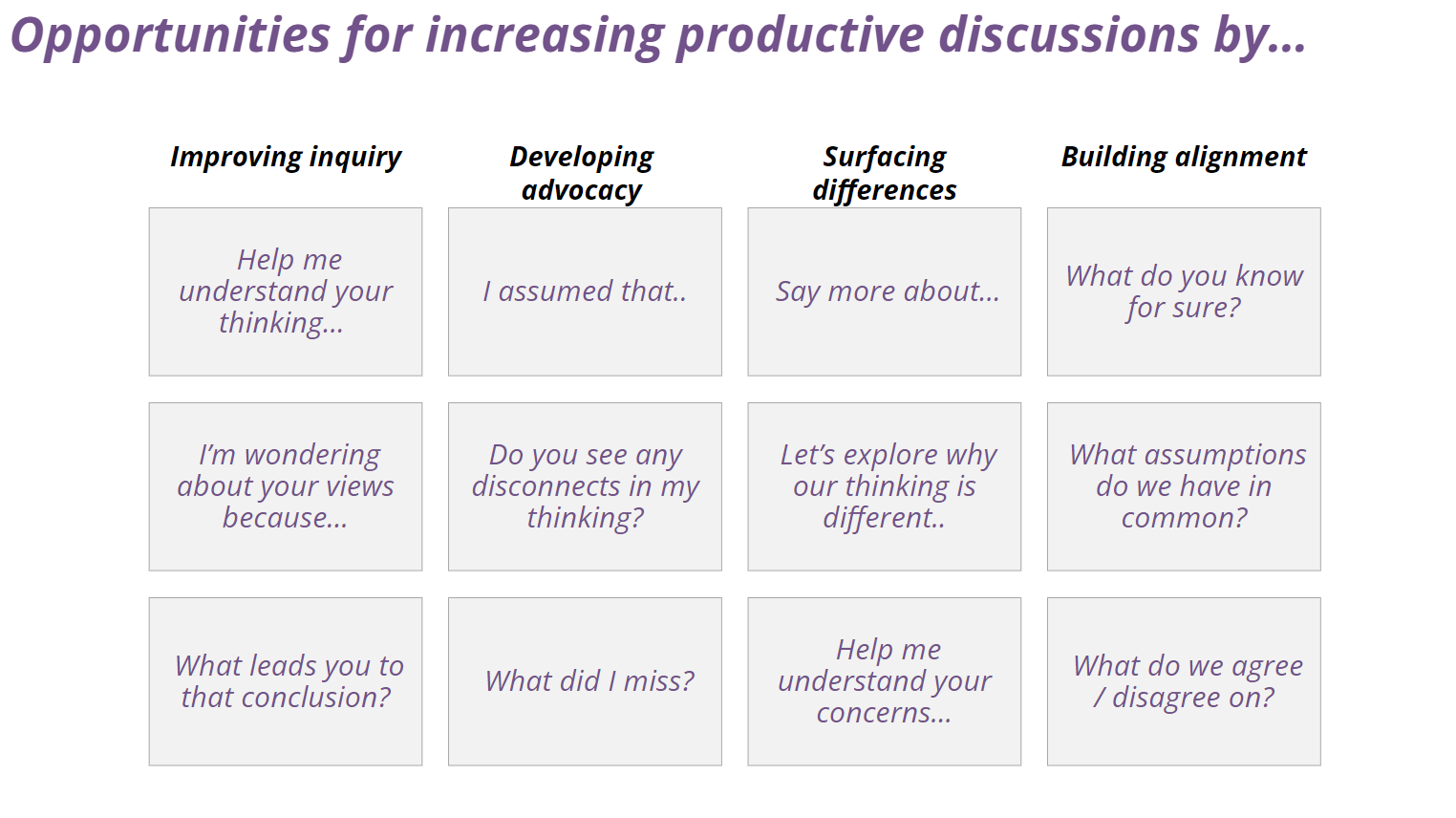
When working with groups or individuals with these tools, I’ve often been asked how does one start to develop their practice, as a result I created the following which is drawn from a variety of sources online and I simply summarised it into a simple table.
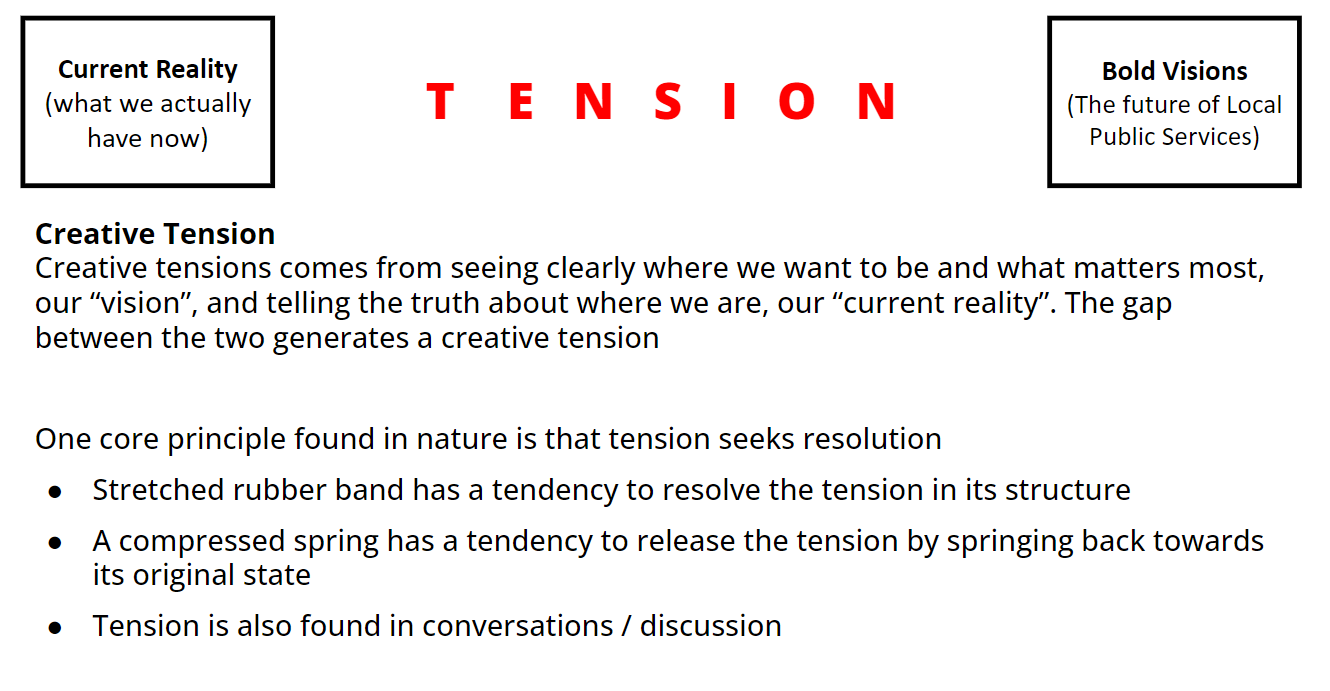
Understanding Creative Tension
Why this model: Through observation I hear and see the tension collapsing as either people believe bold visions are unrealistic or too far fetched or that we are not acknowledging the current reality and situation and knowing where we are starting from.
Summary: Built on the concept of “creative tension” proposed by Dr. Martin Luther King, Jr. in his famous “Letter From a Birmingham Jail,” Creative tension is the gap between our creative vision and our current reality, this ‘structural tension,’ exists in all parts of our lives.
During any creative process, one has an eye on the future, where you want to go and you also need to understand and be clear on where you currently are. There will always be structural tension in the beginning of a creative process, this is due to the inevitable gap and discrepancy between what you want and what you have. Peter Senge, The author of The Fifth Discipline explains that for many of us, Creative Tension is our source of energy and motivation.
However it can also be a burden and can lead us to collapse this tension as we perceive the distance between the future and now is too much…
All tensions seek a resolution and the creative tension is no different, we either learn to build the muscles that help us hold this creative tension (the distance between future and now) or we will choose to be drawn to one of the other…the risk here is one will either misrepresent the future or current reality to make it more palatable and manageable as a tension.
Working with Polarities
Why this model: I think what I am hearing in discussions, articles and posts is a number of polarities to manage, and we maybe in danger of simply seeing this as a problem to solve, this may help uncover aspects of the discussion that have been missing before.
Summary: Polarity Thinking, founded by Dr. Barry Johnson, over 45 years ago, provides an easy way to make visible and actionable what may have been hidden in the past. It is about tapping into the power of the “and.” and harnessing the ability to see and act from two very different strengths simultaneously.
Key points to note
- Inclusion and recognition of “and” thinking
- Polarities are not problems to solve
- 2 parts of the same whole – e.g. centralisation and decentralisation
- Important to map the context to understand where and how you can get best of both worlds to avoid having the downsides of just one side or worst case downsides to both
Example
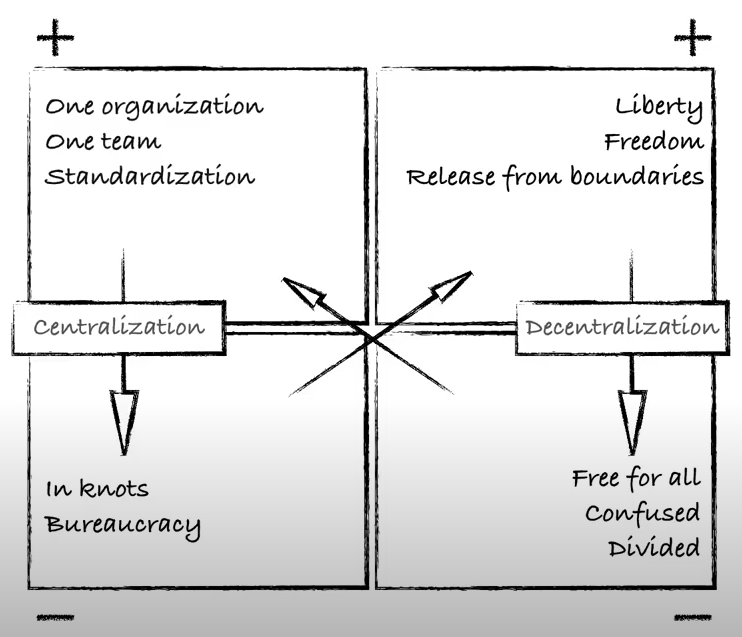
Here is a very useful 4 min Introduction on Polarities by Jennifer Garvey Berger
As mentioned above these tools require and take practise and are proven to help increase the effectiveness of conversations and discussions. If there was a space in which we needed to do this, this is one of them…




 A journey through life - Carl's Notepad